The most common mistake Rhodes applicants make is treating it as an academic scholarship. It's not. A 4.0 GPA gets you through the door — past a certain threshold, more GPA points add nothing. What Rhodes selectors are actually looking for is harder to manufacture and harder to fake: evidence of character, leadership driven by something other than ambition, and a coherent sense of what you're trying to do in the world. The people who get refused most often aren't the weakest candidates academically. They're the ones who are brilliant but haven't lived much beyond their grade transcript.
Quick answer: The Rhodes Scholarship is fully funded (tuition + ~£18,180/year stipend + flights) for 1-2 years at Oxford. Acceptance rates are well below 1% in most constituencies. The four criteria are scholastic attainments, energy/commitment, character, and leadership. Character and leadership are weighted most heavily at interview stage.
What Is the Rhodes Scholarship?
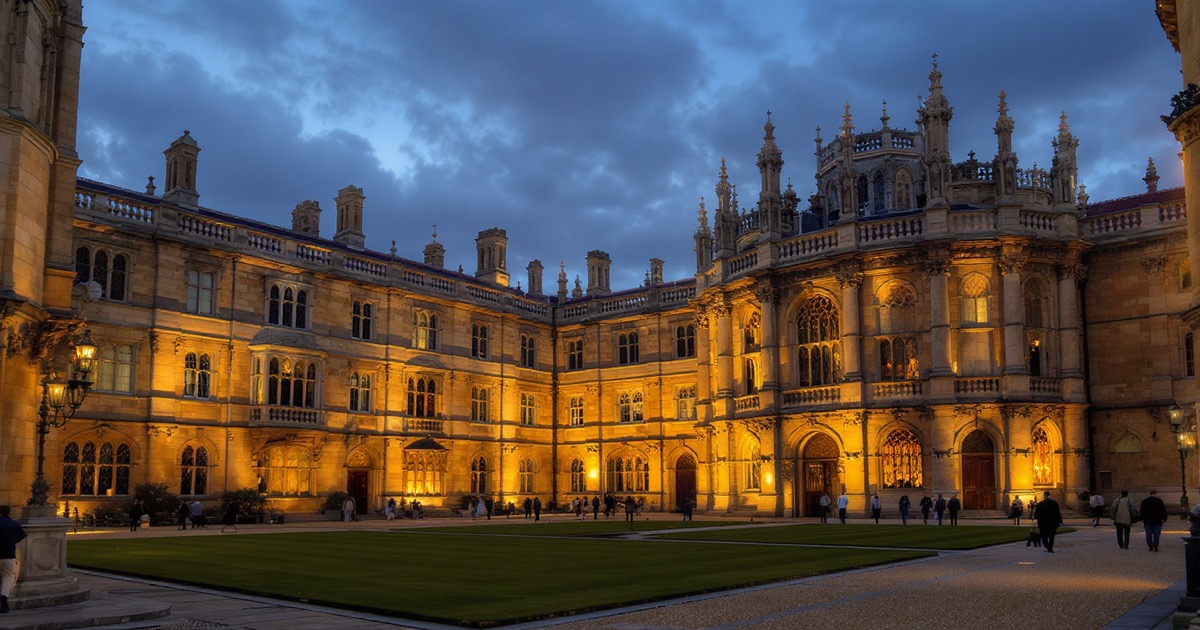
The Rhodes Scholarship is the world's oldest international graduate fellowship, established in 1903 under Cecil John Rhodes's will. It funds postgraduate study at the University of Oxford — typically a one-year master's (BCL, MPhil, MSc, MBA) or a two-year DPhil (Oxford's equivalent of a PhD). Some scholars combine degrees over multiple years.
The scholarship is awarded in over 60 constituencies — geographic groupings of countries. There are separate constituency competitions for the United States (32 awards annually), United Kingdom, Germany, Australia, Canada, India, South Africa, and many more. You apply in the constituency where you're eligible, not globally — which means you're competing against peers from your own country or region, not a single worldwide pool.
What Does the Rhodes Scholarship Cover?
- Oxford University fees — all tuition and college fees paid in full
- Living stipend — approximately £18,180 per year (2024-25 rate, reviewed annually)
- Settling-in allowance — one-time payment for arrival costs
- Economy class flight — at the start and end of your scholarship
- Health insurance — covered during your scholarship period
It does not cover research costs, personal travel, family members, or extensions beyond the funded period without Trust approval.
What Are the Four Selection Criteria?
1. Literary and Scholastic Attainments
An outstanding academic record. GPA matters, but so does what you've done beyond coursework — research, publications, recognition in your field.
2. Energy to Use Talents to the Full
Drive, commitment, the capacity to work hard on things that matter to you. Assessed through sustained engagement — not a resume stuffed with activities you quit after a semester.
3. Truth, Courage, Devotion to Duty, Kindliness, Fellowship
Character. This is where the selection is most subjective — and most meaningful. Selectors are looking for moral seriousness, not just ethical statements.
4. Moral Force of Character and Instincts to Lead
Not authority for its own sake. The kind of leadership that emerges because others trust you — not because you pursued the title.
These criteria are not equal in weight at every stage. At the transcript-screening stage, academic attainments matter most — it's a filter. By the time you're at the national interview, you've cleared the academic bar. From that point, selectors are almost entirely focused on criteria 3 and 4.
Who Is Eligible?
Eligibility varies significantly by constituency. As a general framework:
- Citizenship/residence: You must meet the citizenship or residency requirements of your constituency. Some constituencies allow permanent residents; others require citizenship.
- Age: Most constituencies require applicants to be 18–24 at the time of application. Some have raised this to 27 for constituencies with a history of graduate applicants.
- Degree: A bachelor's degree — completed or near-completion — is required. Postgraduate students are eligible in most constituencies.
- Character: You must be able to demonstrate fitness for the criteria above through your application materials and interview.
Check your specific constituency: Requirements differ in meaningful ways — age limits, citizenship requirements, whether postgraduate students are eligible, and even the number of awards given annually. The Rhodes Trust website has constituency-specific guidance. Don't rely on general descriptions.
What Does the Application Look Like?
The application typically includes: academic transcripts, test scores (GRE/GMAT in some constituencies), a personal statement, a proposed study plan at Oxford, letters of recommendation (usually 4-5), and evidence of extracurricular activities and leadership.
The personal statement is where most applications win or lose. It should not be a list of accomplishments — the rest of the application does that. It should answer one implicit question: why does this person, with this history and these values, want to study this at Oxford, and what are they going to do with it? That question requires a coherent narrative, not an inventory of achievements.
How Does the Interview Work?
Selection typically happens in two stages: a regional/state interview and (for finalists) a national interview. The interview panel is usually 4-6 people — alumni, academics, community leaders. Interviews run 15-20 minutes, though they can feel longer.
Questions are not primarily about your academic work. They're about what you think. Common interview themes include:
- Current events and their implications — you're expected to have considered views
- Ethical dilemmas without clean answers — Rhodes selectors are testing whether you can sit with uncertainty honestly
- Your plans and why — not just "I want to study X at Oxford" but what you'll do with that, what problem you're trying to solve
- Your failures — how you've handled setbacks, what they taught you
- Challenges to your stated views — selectors will push back to see whether you defend positions thoughtfully or immediately capitulate
The counterintuitive truth about Rhodes interviews: disagreeing with the panel, firmly and thoughtfully, is often more impressive than agreement. They're not looking for people who tell them what they want to hear. They're looking for people who have the courage and clarity to hold a reasoned position under pressure.
What Actually Gets Strong Applicants Rejected?
The most common failure mode for academically qualified candidates is what selectors sometimes call "résumé padding" — evidence of leadership that exists entirely on paper. Student government president who achieved nothing significant during their term. Volunteer work that lasted one summer and never came up again. A research project that was entirely supervised, with the candidate playing a peripheral role.
Selectors have read thousands of applications. They know the difference between someone who genuinely built something or led something versus someone who accumulated titles. The interview exposes the difference in about three minutes.
A second failure mode is the absence of intellectual curiosity outside your own field. Rhodes scholars tend to be genuinely interested in ideas across domains. A candidate who can speak only about their major — however brilliantly — reads as narrower than Oxford's graduate environment requires.
How to Strengthen Your Application
Start earlier than you think. The activities and commitments that selectors find compelling aren't built in a semester — they're built over years. If you're a first or second-year student reading this, the most useful thing you can do is identify something genuinely important to you and pursue it seriously over the next three years, not for the scholarship, but because it matters.
Choose recommenders who can speak specifically, not generally. "She is an exceptional student with remarkable intellectual gifts" is useless. "In three years of working together on this project, I watched her make this specific decision under this specific pressure, and here's what it revealed about her character" is valuable. Coach your recommenders — not on what to say, but on what to address.
For the personal statement: write it in your voice. If it sounds like an admissions essay template, start over. Selectors can distinguish between writing that reflects genuine thinking and writing that reflects an applicant who read too many "how to write a Rhodes essay" guides.
FreeStudentTools tracks the Chevening Scholarship and Gates Cambridge Scholarship as alternatives — both fully funded, both highly competitive, with different selection emphases. Compare your options at FreeStudentTools Scholarships.
The last piece of advice — and the one that's hardest to give someone who's been told their whole life to be ambitious: apply because Oxford is specifically where you need to be for what you're trying to do. Not because Rhodes is the most prestigious scholarship. Selectors can tell the difference, and the former is far more compelling.
Compare scholarship funding, eligibility, and deadlines side-by-side — free, no sign-up.
Compare scholarships →

