Most articles about the Canada Study Permit open with the CAD $150 fee and call it a day. That number is almost irrelevant. The real preparation is DLI verification, proving you have enough money to live on, biometrics, a Medical Examination in some cases, and understanding how your permit choice affects your PGWP eligibility years later. Get one of those wrong and you're not studying in Canada.
Quick answer: A Canada Study Permit costs CAD $150 plus CAD $85 biometrics (first time). You need proof of at least CAD $10,000 beyond tuition for living costs. Processing takes 4–16 weeks depending on your country. Work rights: up to 24 hours per week off-campus during term.
What Is a Canada Study Permit?
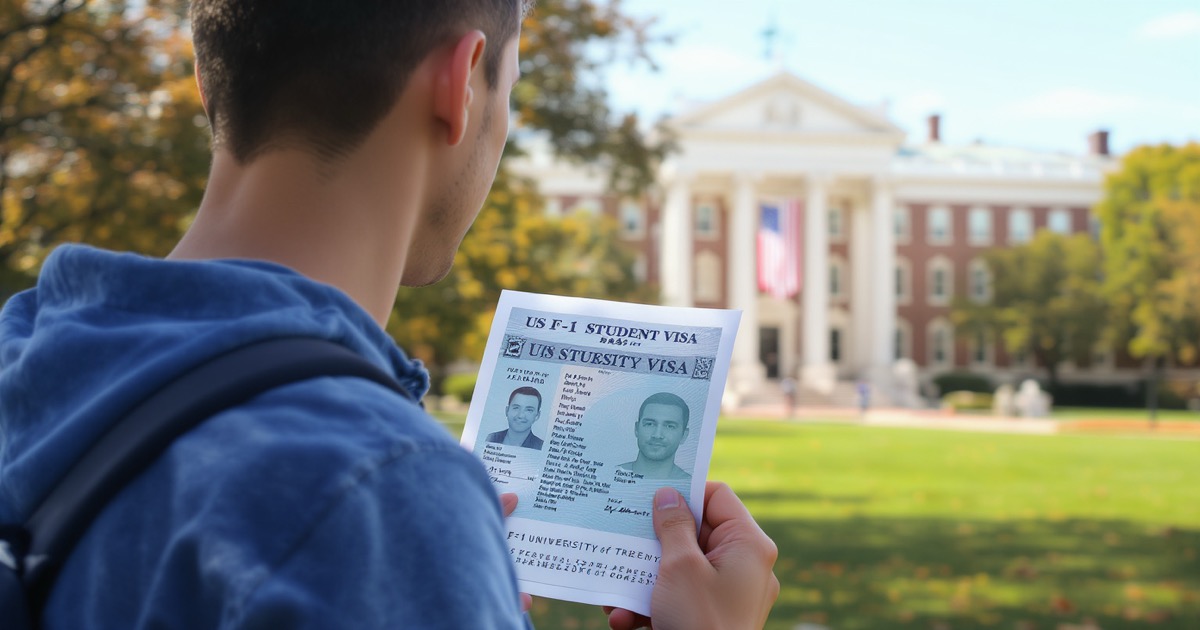
A study permit is a document issued by Immigration, Refugees and Citizenship Canada (IRCC) that lets you study at a Designated Learning Institution (DLI) in Canada. It's not a visa — it's a separate document. Many students need both a study permit and a Temporary Resident Visa (TRV) or Electronic Travel Authorization (eTA) to actually enter Canada.
You need a study permit if your programme is longer than 6 months. Short language courses or summer programmes under 6 months don't require one — but if there's any chance you'll extend, get the permit anyway. Applying from inside Canada is possible but more restrictive.
What Is a DLI and Why Does It Make or Break Your Application?
Every school must be a Designated Learning Institution to enrol international students with a study permit. DLI status is assigned by provincial and territorial governments, not the federal government, which means the list changes and not every school is on it.
More importantly: DLI status determines whether you'll qualify for a Post-Graduation Work Permit (PGWP) after you graduate. After 2024 policy changes, many private colleges were removed from the PGWP-eligible list entirely. You could complete a legitimate programme at a legitimate DLI and still be ineligible for a work permit afterwards.
Check before you accept: Look up your institution on the official IRCC DLI list and verify PGWP eligibility separately. Don't assume acceptance of your study permit application means PGWP eligibility — they're different checks.
FreeStudentTools recommends verifying DLI status directly at the IRCC website (canada.ca) every time — schools can lose DLI status and the list is not always current in third-party guides.
How Much Does the Canada Study Permit Cost?
| Item | Cost (CAD) |
|---|---|
| Study permit application | $150 |
| Biometrics (first time — valid 10 years) | $85 |
| Medical examination (if required) | $200–$350 |
| Temporary Resident Visa / eTA (if required) | $100 / $7 |
| Total without medical | ~$235–$335 |
Compared to UK or Australian student visas, this is low. But the financial proof requirements are a different matter.
How Much Money Do You Need to Show?
IRCC requires you to demonstrate you can cover tuition AND living costs. The official minimum for living costs is CAD $10,000 for the first year (plus CAD $4,000 for each additional year for a spouse or partner, and CAD $3,000 per child). Quebec has higher requirements.
These are minimums, not recommendations. Tuition for international students typically runs CAD $20,000–$40,000 per year depending on the programme and institution. Add living costs of CAD $12,000–$20,000 per year in major cities like Toronto or Vancouver.
There's no strict 28-day bank statement window like the UK, but your proof of funds must be recent — typically within 4–6 months of your application date. Acceptable forms include: bank statements, investment accounts, Canadian bank letters, proof of loans, or scholarship letters.
Do You Need a Medical Examination?
Possibly. You're required to have an Immigration Medical Examination (IME) if you're from certain countries (the IRCC list changes), if you've spent 6+ months in certain countries recently, or if your programme involves working with children, the elderly, or healthcare settings — even if the work is unpaid.
The medical must be done by a designated panel physician — not your regular doctor. Expect to pay CAD $200–$350 and wait 1–3 weeks for results. Building this into your timeline matters because you can't submit without it if it's required.
How Long Does Processing Take?
IRCC publishes current processing times at their website — they change weekly. As of 2026, processing ranges from 4 weeks (some countries) to 16+ weeks for complex cases or high-volume periods. Apply as soon as you have your acceptance letter. Do not wait until a few months before your start date.
Student Direct Stream (SDS): If you're a student from one of the eligible countries (India, China, Philippines, Pakistan, Morocco, Senegal, Vietnam, Antigua and Barbuda, Brazil, Colombia, Costa Rica, Peru, Saint Vincent and the Grenadines, Trinidad and Tobago), you can apply through SDS for faster processing — typically 20 business days. Requirements: IELTS 6.0+ overall, GIC (Guaranteed Investment Certificate) of CAD $10,000 from an approved bank.
What Documents Do You Need?
- Letter of Acceptance — from your DLI. Must be official and include your programme, start date, and fees.
- Proof of identity — valid passport (must cover your full study period plus 6 months).
- Proof of financial support — bank statements, scholarship letters, or loan documents showing tuition + CAD $10,000+ for living costs.
- Biometrics — you'll receive a Biometric Instruction Letter after applying; you then book an appointment at a Visa Application Centre (VAC).
- Medical examination — if required for your country or programme type.
- Statement of purpose — a letter explaining why you want to study in Canada, your programme choice, and your plans after graduation. This is reviewed for genuineness.
- Ties to home country — evidence you plan to leave Canada when your permit expires (family, job offers, property). This sounds counterintuitive, but visa officers assess whether you're a genuine temporary resident.
- Photographs — to IRCC specifications (recent, white background).
Can You Work in Canada on a Study Permit?
Yes — and the rules improved in 2022. International students at DLIs can work up to 24 hours per week off-campus during regular academic terms. During scheduled breaks (summer, winter, reading week), there's no hour limit. Your permit must explicitly say you're authorised to work — if it doesn't, you can't work until you get that updated.
On-campus work has no hour restriction and doesn't require a separate work permit. If you're working off-campus, make sure you have a Social Insurance Number (SIN) — apply for one at a Service Canada location after you arrive.
The PGWP Trap Most Students Miss
Here's the counterintuitive part: the Canada study permit application itself doesn't determine your PGWP eligibility. Your school and programme do — and these are assessed at graduation, not at permit application.
A student who enrolled at a private college that lost PGWP eligibility mid-programme may graduate to discover they can't get a work permit. IRCC has added transitional provisions for some students, but they're not universal. The safest approach: choose a public university or college with a clear track record of PGWP eligibility and verify it before you sign your enrolment agreement.
Programme length also matters. Programmes under 8 months don't qualify for a PGWP at all. Programmes 8 months to 2 years qualify for a permit equal to the programme length. Programmes 2+ years get the maximum 3-year permit.
How to Apply: Step-by-Step
- Confirm DLI and PGWP eligibility — before accepting your offer, verify the institution on the IRCC DLI list and check the PGWP-eligible school list separately.
- Gather your documents — acceptance letter, passport, financial proof, statement of purpose, photos, medical (if applicable).
- Create an IRCC account — apply online at canada.ca. Paper applications take longer and are being phased out.
- Pay fees — CAD $150 study permit + CAD $85 biometrics.
- Submit biometrics — you'll get a Biometric Instruction Letter; book at a VAC within 30 days.
- Complete medical — if required, book with a panel physician immediately after submitting (don't wait for approval).
- Receive Port of Entry Letter — if approved, you'll get an introduction letter. Your actual permit is issued at the Canadian border when you arrive.
- Arrive and get your permit stamped — bring all original documents to the port of entry. The border officer issues your physical study permit there.
Common Reasons Applications Are Refused
The most frequent refusals come down to three things: insufficient proof of funds, failure to demonstrate ties to your home country, or a statement of purpose that reads as an immigration intent document rather than a genuine academic plan.
Officers are also trained to spot implausible study plans — an accountant with 10 years of experience applying for a 2-year entry-level accounting diploma raises flags. Your choice of programme should make sense relative to your background. If it doesn't obviously, explain why clearly in your statement of purpose.
Missing or expired medical results account for a significant share of delays. If you're in a required-medical country, book the examination as soon as you submit your permit application — don't wait for the permit to ask.
What Happens to Your Permit at the Border?
This is the part most guides skip. You don't get your permit in the mail. Your approved application comes as an "Introduction Letter" (sometimes called an eApproval). You take this to the Canadian border, and the CBSA officer there issues your actual study permit. If anything in your documents doesn't match your application, you can be refused entry at this stage — even with an approved permit application.
Bring originals of everything you submitted online: acceptance letter, financial proof, passport. If you've changed financial institutions or your funding situation has changed since you applied, bring documentation of that too.
Extending or Changing Your Permit
If you need to extend (programme extended, switching to a higher degree) or change your programme, apply well before your permit expires — ideally 90 days before. If you apply to extend before expiry, you can continue studying under "maintained status" (previously called implied status) while IRCC processes your application.
Switching to a different DLI requires notifying IRCC. You can't just transfer between schools without updating your permit documentation.
Once you graduate, you have 180 days to apply for a PGWP. You can't apply for a PGWP from inside Canada on a visitor visa — you need to apply before your study permit expires or while on maintained status.
For scholarship options that could fund your Canadian studies, FreeStudentTools tracks Fulbright and Commonwealth scholarships for eligible nationalities. Compare your options at FreeStudentTools Compare.
Track visa application milestones alongside university offers — all in one place.
Track your applications →