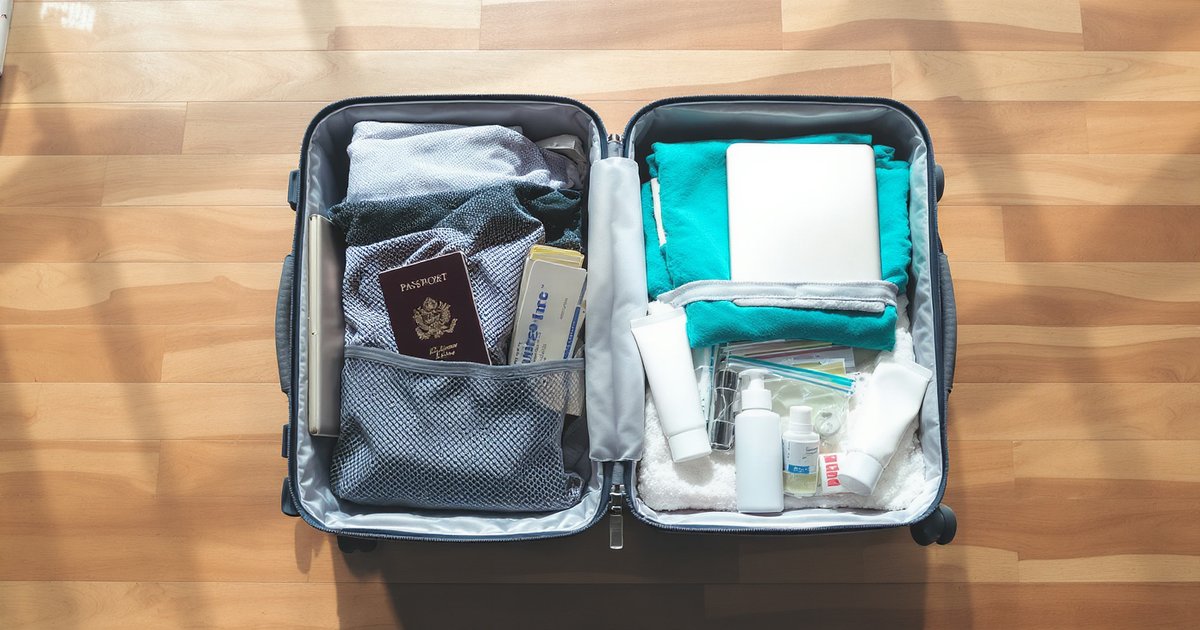
First-time international students consistently overprepare on clothes and underprepare on documents. They pack four pairs of shoes and forget to photograph their bank statements. They bring hair products they could have bought for half the price at a local supermarket, and they arrive at immigration without the proof of funds letter their visa officer asked for.
This guide gives you the complete pre-departure picture — not just what to pack, but what to do before you leave, what to leave at home, and the tasks that most students only realise they missed after they've landed. FreeStudentTools has structured this for any destination — UK, US, Canada, Australia, or mainland Europe.
Which Documents Should You Carry on Your Person?
- Passport — valid for at least 6 months beyond your expected return date
- Visa / entry clearance vignette — check the entry date restrictions; some visas can't be used before a specific date
- University offer/enrollment letter — the formal document confirming your place and course start date
- CAS number or I-20 — CAS (UK), I-20 (US), or equivalent for your destination
- Proof of financial means — bank statements from the last 3–6 months, or scholarship award letter
- Health insurance documents — policy number, emergency contact number, and coverage dates
- Proof of accommodation — university housing confirmation or tenancy agreement
- Academic transcripts — certified copies of your qualifications
- Vaccination records — especially if your destination requires specific vaccinations
- Emergency contact list — printed, not just in your phone
Electronics — what actually matters
- Laptop — check the keyboard layout if you're studying in a country with a different standard; most are easily adjustable in software settings
- Universal power adapter — not just a plug shape adapter, but a voltage converter if you're bringing high-power appliances (hair dryers, electric shavers) from a 110V country to a 220V country or vice versa. Laptops and phone chargers handle both voltages automatically.
- Phone — ensure it's unlocked for international SIMs before you leave; unlocking after arrival can be complicated
- Power bank — essential for long travel days and airport waiting
- Headphones — for lectures, libraries, and sanity on long flights
- USB hub or multi-port charger — university rooms often have limited plug sockets
What not to pack: high-wattage hair dryers and straighteners rated for your home country's voltage. They'll either fry on foreign voltage or you'll need a converter that's heavier than the appliance. Buy a cheap local one when you arrive — it costs £10–£20 and removes the travel hassle.
Connectivity — sort your data before takeoff
Your first 48 hours involve a lot of app-dependent tasks: navigating from the airport, messaging family, checking your accommodation address, making payments. All of it needs mobile data. Don't rely on airport WiFi or your home carrier's international roaming — roaming rates are expensive and often throttled to frustratingly slow speeds.
The cleanest solution for arrival day is an eSIM. Unlike a physical SIM card, you install it digitally before you leave (takes about 10 minutes on your phone) and it activates the moment you land. No hunting for a phone shop in an unfamiliar city, no language barrier, no standing in a queue with 30kg of luggage.
- Check eSIM compatibility — iPhone XS and later, Samsung Galaxy S20 and later, Google Pixel 3 and later all support eSIM; check your specific model in Settings
- Unlock your physical SIM slot too — you'll want to get a local SIM within the first 1–2 weeks for cheaper long-term rates and a local number (banks and universities often need one)
- Download offline maps before takeoff — Google Maps lets you save areas offline; useful for the first few hours before your eSIM activates
Clothing — less than you think
Pack for 2 weeks of weather, not the full academic year. You'll do laundry. You'll also buy clothes once you're settled. Packing for every weather eventuality results in a 30kg bag and a £200 excess luggage fee.
- Check the climate for your city across the full year — not just your arrival month. UK in September feels warm but UK in January is brutal. Canada in February without a real winter coat is a different kind of suffering.
- Smart/formal pieces — 1 outfit suitable for interviews, presentations, or formal events. You won't need more than one immediately.
- Layers over bulk — a lightweight down jacket, a hoodie, and a waterproof outer layer handle more climates than a single heavy coat.
- Shoes — maximum 3 pairs: everyday walking, something smart, and something for sport or gym. You can buy anything else once you're there.
- Cultural considerations — if you're going to a country with conservative dress norms outside campus, pack accordingly. If your destination is more casual, you may find you've over-packed formal wear.
Medicines and health
- Prescription medication — bring enough for 3 months minimum; longer if possible. Carry a copy of your prescription and a doctor's letter explaining the medication.
- Common OTC medicines — pain relief, antihistamines, stomach remedies. These are available abroad but in different brand names; bring your known ones for the first few weeks.
- Glasses or contact lenses — spare pair plus enough lenses for 3 months. Prescription glasses from opticians abroad can take weeks; having a spare prevents an emergency.
- Dental records or X-rays — if you have ongoing dental treatment, a copy of recent X-rays saves time with a new dentist abroad.
Money and banking — set this up before you leave
- Notify your home bank that you're moving abroad — otherwise your card may be blocked on first use for "suspicious activity" in a foreign country
- Open an international-friendly account before departure — Wise, Revolut, and N26 all offer accounts with low foreign transaction fees. Much cheaper than using your home bank card abroad for months.
- Carry cash in the local currency for the first 48 hours — enough for transport from the airport, a meal, and any immediate supplies
- Know your destination's banking options — UK students can open a student bank account locally once enrolled (you'll need a letter from your university). US students can open a bank account with their I-20 and passport. Australia students need a TFN first.
What Should You Leave at Home?
- Full-size toiletries — shampoo, conditioner, body wash, toothpaste. Universally available. Heavy. Buy locally.
- Bedding — universities provide it or sell it cheaply on arrival. It's bulky and irrelevant if your accommodation has a different bed size than home.
- More than 2 weeks of food from home — border customs in the UK, US, Canada, and Australia have strict rules on importing plant, meat, and dairy products. Some items will be confiscated; some carry fines. A packet of your favourite spice mix is fine. A suitcase of food is not.
- High-value jewellery — leave it unless you genuinely need it. Student accommodation is not always the most secure environment.
- Textbooks — unless specifically required by name before the course starts. Most are available as eBooks or through the university library.
Which Pre-Departure Tasks Do Most Students Miss?
- Confirm your visa entry date restrictions — some visas cannot be used before a specific date; arriving early is not possible
- Book airport transfer — don't assume a taxi will be affordable or available at 2am in an unfamiliar city
- Check university check-in dates — halls of residence have specific move-in windows; arriving on the wrong day means nowhere to go
- Complete any online pre-enrollment requirements — many universities require online registration, module selection, or induction completions before arrival
- Register with your home country's embassy — many countries offer an overseas citizen registration service; useful if there's a crisis or natural disaster
- Get travel vaccinations — some destinations or travel routes require them; check 6–8 weeks before departure as some require multiple doses
- Set up cloud backup — scan all documents, photos of family, anything important
- Get an eSIM for arrival day — Yesim covers 200+ countries; install it before you leave, activate it when you land
- Download offline maps — Google Maps allows offline area downloads; save your arrival city as backup even if you have an eSIM
- Check your phone unlock status — call your carrier before departure; needed for both physical SIM and eSIM compatibility
- Inform your health insurance about your destination — make sure your coverage is active from day one abroad
- Tell your bank where you're going — and confirm your online banking works abroad
- Pack test — do a full pack a week before departure. Weigh the bag. You'll almost always need to remove things, and doing it a week out is calmer than doing it the night before.
The bottom line
Pack light on possessions, heavy on documents. The things you forget at home can be ordered online or bought locally within a week. A missing document at immigration can derail your entire trip. Prioritise accordingly.
For what to expect after you arrive, the accommodation abroad guide covers housing options, what's typically included, and what to check before signing anything. The first-year budget guide has city-by-city cost breakdowns so you know what to expect when you land.
Compare tuition, living costs, and healthcare across countries before you commit.
Compare countries →